Abeyta's Note to Elinora
The StaircaseAbeyta's Note to Elinora is the message through which Abeyta's courtship of Elinora St. Clair becomes an immediate danger and a moral burden for Lizzy Enders. It carries a declaration of lasting love and a plan for the young couple to leave on horseback at night and marry. Lizzy's decision to disclose it to Mother Magdalena may prevent Elinora's departure, but it also breaks confidence and makes Lizzy an object of resentment among the girls.
Message and Stakes
The note is identified as a message from Abeyta to Elinora, whom Lizzy describes to Ben as the Bishop's grandniece. Its contents, as conveyed through Lizzy's account and Abeyta's declaration, concern more than a single meeting: Abeyta says that he and Elinora have been meeting, insists that he will love her forever, and imagines their leaving by horseback at night to wed. The planned escape gives the note its urgency. It links a present courtship to a concrete action that could take Elinora away from the convent and her uncle.
That plan conflicts with the role Elinora has spoken of claiming. Lizzy associates her with talk of becoming a bride of Christ and with encouraging the other girls to wait for a miracle. The note therefore sharpens a tension between Elinora's professed religious future and a secret attachment with its own promise of escape. Lizzy also recalls that Elinora's mother ran off at sixteen. That remembered precedent does not establish what Elinora will do, but it makes Lizzy regard the possibility of running away as more than an abstract threat.
The note's contents reach the reader through Lizzy's understanding of them, not through a reproduced text. When she explains the matter to Ben, she says that it is from a young man at the boys' school, that he wants Elinora to meet him that night, and that they have already been meeting. She fears that Elinora will run away with him and worries that this would hurt the Bishop. The message thus carries both the lovers' intentions and the consequences Lizzy anticipates for people around them.
Lizzy's Custody and Deliberation
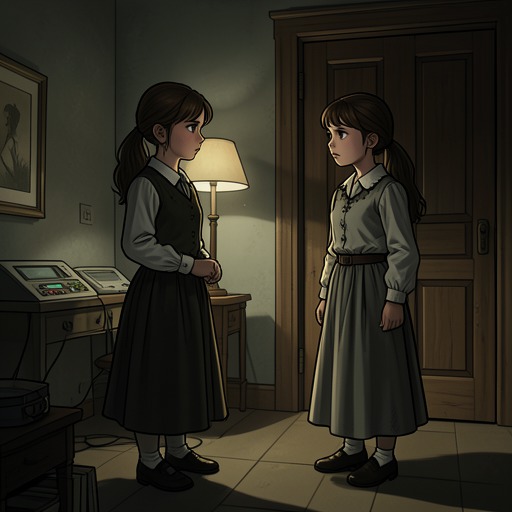
Lizzy keeps the note in her apron pocket after encountering Abeyta and telling him that she will consider the matter. Its presence there makes her a custodian of information Elinora does not know Lizzy possesses. When she later tells Ben she has a note for Elinora, she first makes him promise secrecy. She is unsure whether to pass it on, and her account shows that she is weighing the danger of revealing it against the danger of leaving Elinora free to act on it.
Her hesitation is not simply a reluctance to deliver a message. Lizzy says she dislikes betraying a confidence and recognizes that Elinora does not like her. At the same time, she believes Elinora is too young for the proposed course and fears the harm it may cause. She also considers the Bishop's feelings. The note places her between competing obligations: preserving Abeyta's confidence, respecting Elinora's choices, and warning the adult responsible for her. Lizzy's uncertainty gives the object its central importance before it is delivered; while it remains in her pocket, the decision remains hers.
The note's concealment is temporary, not secret from every listener. Lizzy describes it to Ben but does not say that he reads it or receives it. She continues to carry it, retaining the choice of whether to disclose it herself. This distinction matters: the note's course is shaped by Lizzy's retelling of its contents and by her decision to bring it to an authority, rather than by a recorded reading of its full wording by the other characters.
Delivery and Consequences
Lizzy finds an opportunity to act on the night of the funeral for Delvina. She has volunteered to stay behind from the cemetery procession and mind the baby, Elena. With the note still in her pocket, she fears that Elinora may slip away from the procession to meet Abeyta under the Comanche moon. The funeral setting makes the timing especially pressing: Lizzy believes the meeting may happen that very night, while the others are occupied with mourning and the procession.
When Mother Magdalena leaves the church, Lizzy follows with Elena in her arms and hands over the note. She explains that Abeyta stopped her in the street that afternoon and says that she is afraid for Elinora, while asking Mother Magdalena not to punish her. The request shows that Lizzy's disclosure is not presented as a wish to see Elinora disciplined. Nevertheless, Mother Magdalena tells Lizzy not to tell her how to do her job. Once the note has left Lizzy's possession, the decision about what to do with its information belongs to the convent's authority.
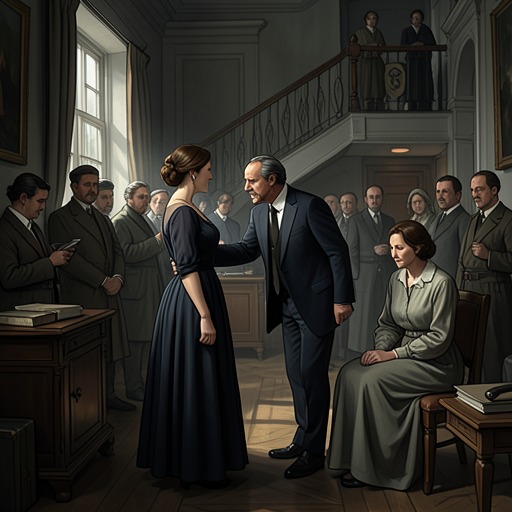
The delivery carries a personal cost. Later, when Bishop Jean-Baptiste Lamy asks why the girls are shunning her, Lizzy admits that she told on Elinora about the note from Abeyta. The note has therefore moved from private message to contested evidence: its disclosure affects Elinora's situation, while marking Lizzy as someone the other girls distrust. The text establishes the shunning and Lizzy's admission, but does not make the note itself a direct explanation of every girl's response.
Narrative Function
The note functions as a small object with consequences larger than its physical presence. First it records the lovers' proposed action as Lizzy understands it; then, carried in her apron, it becomes the focus of her deliberation; finally, placed in Mother Magdalena's hands, it makes the secret available to convent authority. Each change in custody changes who can act on the information. The sequence turns an unseen message into a cause of conflict without requiring the note's wording to appear on the page.
Its path also brings Lizzy's judgment into view. She is not merely a messenger: she chooses when to speak, whom to tell, and what to emphasize, including her fear for Elinora and her plea against punishment. Her later admission to the Bishop confirms that the disclosure remains a burden she can name openly, even as it has isolated her from the girls. At another point, Lizzy takes a different letter from her apron pocket, one addressed to her father. That later letter is distinct from Abeyta's note, but the contrast underscores how often written messages in Lizzy's life place private intentions into the hands of someone who must decide what to do with them.